Understanding the brain, neuroprosthetics, and their interactions.
Our research focuses on how neuroprosthetics can be used for sensory restoration.
A brief history of neuroprosthetics.
Neuroprosthetics, also known as neural prosthetics, is a multidisciplinary field that merges neuroscience and biomedical engineering to develop devices aimed at restoring lost or altered functions of the nervous system. These devices, referred to as neuroprostheses, can replace or enhance sensory, motor, or cognitive functions impaired due to injuries, diseases, or congenital conditions. They operate by interfacing with the nervous system through electrical stimulation or by recording neural activity.
Aims and philosophy
We want to improve the lives of people suffering from sensory loss such as deafness or blindness.
Search for the truth
Science is a long process with the aim of increasing our knowledge of the world. We search for the truth and accept that with increased knowledge we get a step closer towards it.
Collaboration
The world is too complex for problems to be solved by one person. Experts need to come together for this. To fully understand neuroprosthetics we need expertise in biotechnologies, neuroscience, medicine, AI and more.
Question based science
We do not study something because we it allows us to use a cool technique or fancy analysis. We study something because it allows us to answer an important question. The questions is our guide.
Openess and honesty
Knowledge should not be restricted and should be shared widely with as many as possible. Publications should be open access. Data and code should be shared with those who want it.
Teamwork
Within the lab we support one another so that no one feels overwhelmed or burnt out. If we need help, we ask for it. If we are asked for help we do our best to give it.
Fun
Science can be hard, disspiriting and challenging. So we need to make sure it is also fun and exciting. Never miss an opportunity to have a good laugh and celebrate your successes.
Techniques
The lab uses a wide array of techniques to best answer the questions we have. We are always interested in learning new techniques.
In vivo calcium recordings.
- 2-photon and miniscopes.
- Surface and deep brain structures.
In vivo extracellular electrophysiology
- 32 or 64 electrodes
Brain stimulation
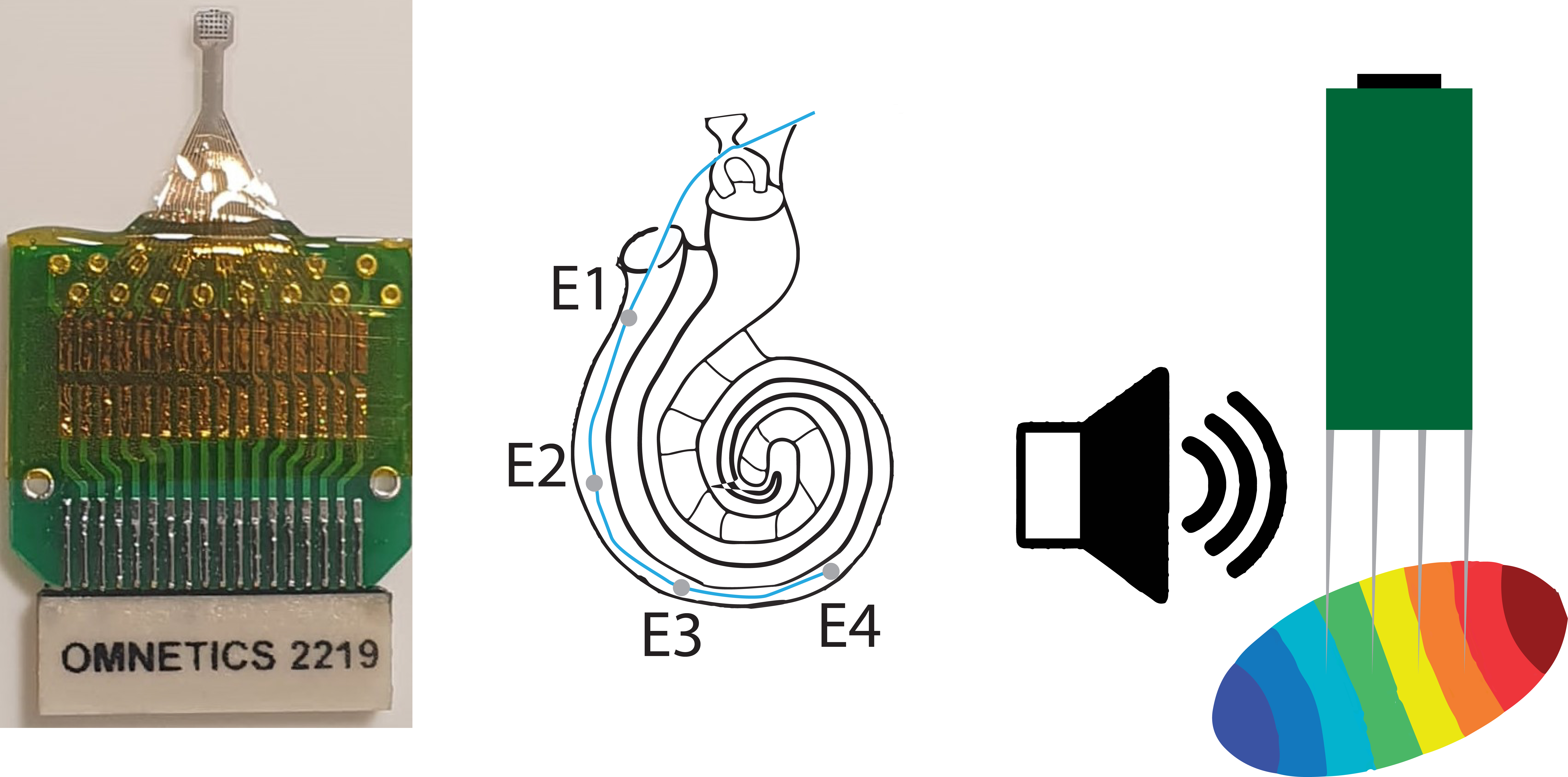
- Electronic stimulation using cochlear and cortical implants
- Optogenetics for cell type specificity.
Computational tools
- Use of the latest analysis techniques
- Metric space analyses
- Unsupervised learning methods
 Neuroprosthetics lab